

Key Components of Successful Digital Marketing Strategies!
Introduction
Digital marketing has become an essential part of business growth in today’s competitive online environment. Businesses use digital platforms to connect with customers, promote their products and services, and build brand awareness. However, achieving good results requires more than simply posting on social media or running advertisements. A successful digital marketing strategy combines different techniques to reach the right audience and achieve measurable goals.
Understanding the key components of digital marketing helps businesses plan effective campaigns, improve their online presence, and build long-term customer relationships.
1. Setting Clear Digital Marketing Goals
Every successful digital marketing campaign starts with clearly defined objectives. Businesses should understand what they want to achieve before selecting marketing channels or creating content.
Common digital marketing goals include:
- Increasing website traffic and online visibility.
- Generating quality leads and potential customers.
- Improving brand awareness and recognition.
- Increasing product sales and service enquiries.
- Building customer engagement and loyalty.
Setting measurable goals helps businesses track their progress and understand whether their marketing activities are producing the expected results.
2. Understanding the Target Audience
Identifying the target audience is one of the most important components of digital marketing. Businesses need to understand their customers’ interests, requirements, preferences, and online behaviour.
Audience research helps marketers identify:
- Age groups and geographical locations.
- Customer interests and purchasing habits.
- Problems customers want to solve.
- Preferred social media and digital platforms.
- Search terms customers use to find services.
When businesses understand their audience, they can create relevant marketing campaigns that attract potential customers and encourage meaningful interactions.
3. Search Engine Optimization (SEO)
Search Engine Optimization (SEO) helps websites improve their visibility in search engine results. It focuses on optimizing website content, structure, and performance to attract organic traffic from search engines such as Google.
Important SEO activities include:
- Keyword research and implementation.
- Creating informative and relevant website content.
- Optimizing page titles and meta descriptions.
- Improving website loading speed.
- Building quality backlinks.
- Optimizing websites for mobile devices.
SEO is a long-term marketing approach that helps businesses reach people actively searching for their products or services.
4. Social Media Marketing and Engagement
Social media platforms provide businesses with opportunities to communicate directly with their audiences. Platforms such as Facebook, Instagram, LinkedIn, and YouTube help brands share information, promote services, and develop customer relationships.
An effective social media strategy includes:
- Publishing informative and engaging posts.
- Sharing videos, infographics, and promotional creatives.
- Maintaining a consistent posting schedule.
- Responding to comments and customer messages.
- Running targeted social media advertising campaigns.
- Monitoring engagement and audience feedback.
Regular interaction helps businesses maintain their online presence and create stronger connections with customers.
5. Content Marketing and Creative Branding
Content marketing involves creating and sharing valuable information to educate audiences, answer questions, and build brand credibility. Quality content can take different forms, including blogs, articles, videos, social media posts, brochures, and infographics.
Visual branding is equally important because customers often recognize businesses through their logos, colours, designs, and advertising materials.
Businesses can strengthen their visual identity through professional branding services in hyderabad, which help maintain consistency across different marketing platforms.
Important creative branding elements include:
- Professional logo and brand identity.
- Informative brochures and promotional materials.
- Consistent brand colours and typography.
- Creative advertisements and videos.
- Business presentations and marketing graphics.
A recognizable brand identity helps businesses communicate their values and create a consistent impression among potential customers.
6. Paid Advertising and Campaign Management
Paid advertising helps businesses reach specific audiences through sponsored promotions on search engines and social media platforms. Unlike organic marketing, paid campaigns can provide immediate visibility when properly planned and managed.
Popular paid advertising methods include:
- Google Search Ads.
- Google Display Ads.
- YouTube video advertisements.
- Facebook and Instagram Ads.
- LinkedIn advertising campaigns.
Businesses should select suitable advertising platforms based on their objectives, target audience, and marketing budget.
Monitoring campaign performance is essential to understand which advertisements generate enquiries, website visits, and conversions.
7. Website Design and User Experience
 A website is often the first point of contact between a business and its potential customers. Therefore, an attractive, informative, and user-friendly website plays an important role in the success of digital marketing.
An effective business website should include:
- Simple and easy-to-use navigation.
- Mobile-friendly and responsive design.
- Fast loading speed.
- Clear service descriptions.
- Contact information and enquiry forms.
- Relevant images and engaging content.
- Secure browsing and reliable functionality.
A well-designed website encourages visitors to explore services and take action, such as making an enquiry or purchasing a product.
8. Online Reputation Management
Customer reviews, ratings, and online feedback influence how people perceive a business. Maintaining a positive online reputation helps build customer confidence and improve brand credibility.
Important reputation management activities include:
- Monitoring customer reviews regularly.
- Responding professionally to feedback.
- Addressing customer complaints.
- Encouraging genuine customer reviews.
- Maintaining accurate business information.
- Sharing positive customer experiences.
Businesses should treat customer feedback as an opportunity to improve their services and strengthen relationships.
9. Performance Tracking and Analytics
Measuring digital marketing performance helps businesses understand the effectiveness of their strategies. Analytics provides useful information about website visitors, advertising campaigns, customer engagement, and conversions.
Important performance indicators include:
- Website traffic and visitor behaviour.
- Search engine rankings.
- Social media reach and engagement.
- Cost per click (CPC).
- Lead generation and conversion rates.
- Return on advertising investment (ROAS).
Regular performance analysis helps marketers identify successful activities and make necessary improvements.
10. Video Marketing and Advertising
Video marketing has become an effective way to communicate brand messages and capture audience attention. Businesses use promotional videos, product demonstrations, customer testimonials, and explainer videos to present their services.
Professional ad filmmakers in hyderabad help businesses develop creative advertising videos that communicate marketing messages effectively.
Video marketing can support:
- Brand awareness campaigns.
- Product and service promotions.
- Social media engagement.
- Corporate presentations.
- Customer education.
- Promotional advertising campaigns.
Creative video content makes information easier to understand and helps businesses communicate with audiences across digital platforms.
Conclusion
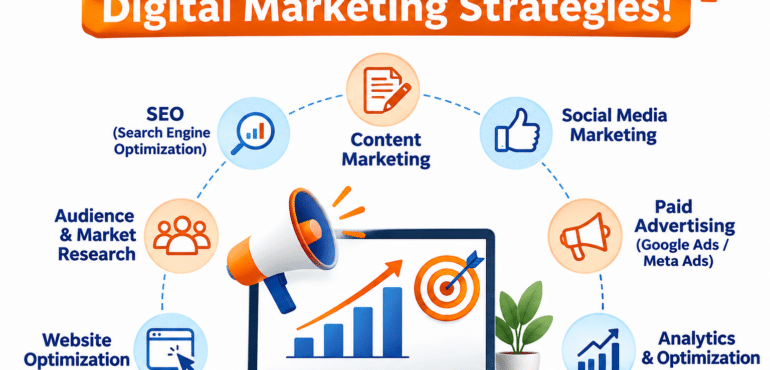
Successful digital marketing requires a combination of planning, audience research, SEO, social media marketing, content creation, paid advertising, website optimization, and performance analysis. Each component contributes to building a strong online presence and achieving business objectives.
Businesses that regularly evaluate their strategies and adapt to changing customer behaviour can improve their marketing performance. Working with a professional movie marketing agency in hyderabad can also help entertainment brands plan specialized promotional campaigns and reach relevant audiences.
A well-organized digital marketing strategy is not just about gaining online visibility. It is about building meaningful customer relationships, developing brand recognition, and supporting sustainable business growth.


