

How Search Engine Optimization Works Step by Step
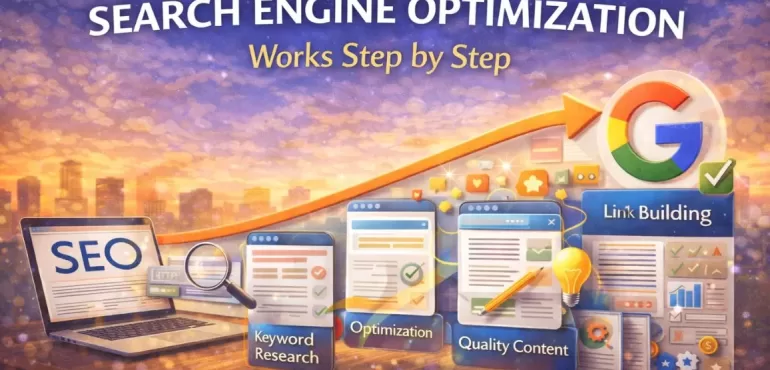
Search engines like Google help people find answers, products, and services within seconds. But how does a website appear on the first page while others remain invisible? The answer lies in search engine optimization. SEO is a step-by-step process that helps websites rank higher in search engine results and attract the right audience organically.
Let us understand how SEO works in a simple and structured way.
Step 1: Understanding Search Engine Optimization
Search engine optimization is the process of improving a website so that search engines can easily find, understand, and rank it. The main goal of SEO is to increase organic traffic without paying for ads.
SEO focuses on:
- Making websites search engine-friendly.
- Improving content quality.
- Enhancing user experience.
- Increasing visibility in search results.
When SEO is done correctly, it helps businesses gain long-term online growth.
Step 2: Keyword Research—The Foundation of SEO
Keyword research is the first and most important step in SEO. Keywords are the words or phrases people type into search engines to find information.
Why keyword research matters:
- Helps understand what users are searching for.
- Guides content creation.
- Increases chances of ranking for relevant searches.
How keyword research is done:
- Identify business-related topics.
- Find keywords with good search volume.
- Choose keywords with low to medium competition.
- Focus on user intent, not just traffic.
Using the right keywords ensures your content reaches the right audience at the right time.
Step 3: Creating High-Quality Content
Content is the heart of search engine optimization. Search engines prefer websites that provide helpful, original, and relevant information.
Key points for SEO-friendly content:
- Write content for users, not just search engines.
- Answer common questions clearly.
- Use keywords naturally without overuse.
- Keep the language simple and informative.
Quality content builds trust, keeps users engaged, and encourages them to spend more time on your website.

Step 4: On-Page SEO Optimization
On-page SEO refers to optimizing individual web pages so search engines can better understand the content.
Important elements of on-page SEO:
- Title tags with main keywords.
- Meta descriptions that attract clicks.
- Proper use of headings (H1, H2, H3).
- Keyword placement in content.
- Optimized images with alt text.
- Internal linking between related pages.
On-page SEO helps search engines match your page with relevant user searches.
Step 5: Technical SEO Basics
Technical SEO ensures that a website works smoothly and is easy for search engines to crawl and index.
Key technical SEO factors:
- Fast website loading speed.
- Mobile-friendly design.
- Secure website (HTTPS).
- Proper URL structure.
- XML sitemap submission.
A technically strong website improves user experience and supports better rankings.
Step 6: Off-Page SEO and Link Building
Off-page SEO focuses on activities done outside the website to improve authority and credibility.
Common off-page SEO methods:
- Earning backlinks from trusted websites.
- Brand mentions on other platforms.
- Social media sharing.
- Online directory listings.
Quality backlinks act as votes of trust, signaling search engines that your website is reliable and valuable.
Step 7: User Experience and SEO
Search engines prioritize websites that provide a good user experience.
SEO-friendly user experience includes:
- Easy website navigation.
- Clear call-to-action buttons.
- Readable content format.
- Low bounce rate.
- Mobile responsiveness.
When users find value on your site, search engines reward it with better rankings.
Step 8: Monitoring and Measuring SEO Performance
SEO is not a one-time task. Continuous monitoring is necessary to track progress and improve results.
Important SEO metrics to track:
- Organic traffic growth.
- Keyword rankings.
- Click-through rate.
- Bounce rate.
- Conversion rate.
Using analytics tools helps businesses understand what works and what needs improvement.
Step 9: Role of Professional SEO Services
Many businesses choose professional SEO services to manage their optimization process effectively.
Benefits of SEO services:
- Expert keyword research and planning.
- Regular content optimization.
- Technical issue resolution.
- Performance tracking and reporting.
- Long-term ranking improvements.
SEO services save time and ensure consistent results through proven strategies.
Step 10: SEO Is a Long-Term Process
Search engine optimization does not deliver instant results. It is a gradual process that builds a strong online presence over time.
Why SEO takes time:
- Search engines need time to evaluate changes.
- Competition affects ranking speed.
- Consistent efforts bring stable results.
With patience and proper execution, SEO provides sustainable traffic and long-lasting visibility.
Conclusion
Understanding how search engine optimization works step by step helps businesses make informed digital decisions. From keyword research and on-page SEO to technical improvements and professional SEO services, every step plays a vital role in achieving higher rankings.
SEO is not about shortcuts but about creating value, improving experience, and building trust. When done correctly, it becomes a powerful tool for long-term online success.


